

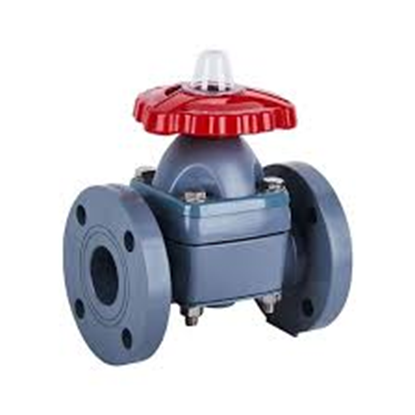
Application:
Diaphragm valves are specialized, glandless valves that use a flexible membrane to isolate fluids from the operating mechanism, making them ideal for handling corrosive, abrasive, viscous, or high-purity substances. They are extensively used in pharmaceutical, food/beverage, chemical, and water treatment industries for precise, leak-proof, and sterile flow control.
Class: 150#, 300#, 600#, 900#, 1500#, 2500#
Design Standard: BS EN 13397/ BS 5156
Body Materials (Metal & Plastic): Cast iron, ductile iron, stainless steel (304, 316, 316L), carbon steel, PVC (Polyvinyl Chloride), CPVC, PP (Polypropylene), and PVDF (Polyvinylidene fluoride).
Diaphragm Materials (Elastomers/Polymers): EPDM (Ethylene Propylene), PTFE (Polytetrafluoroethylene), Neoprene, Viton® (FKM), Butyl rubber, Natural rubber, and Silicone.
Body Linings (For Corrosive Media): PTFE, PFA, FEP, Ebonite, Hard Rubber, Neoprene, and Butyl.
Size: 25 mm to 150 mm
Ends: Flanged End
Operation: Manual
